
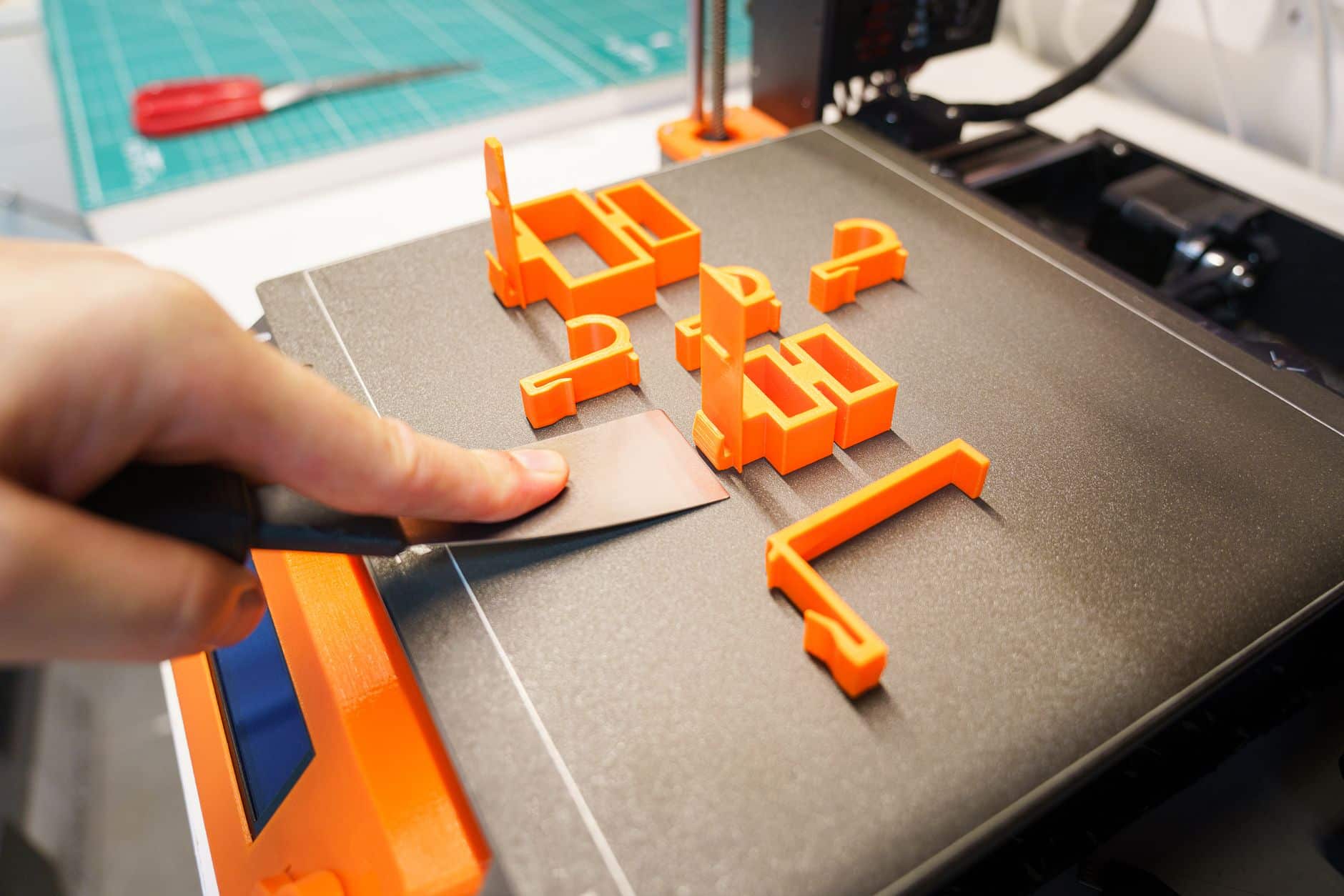
You’ve got a part to make, a deadline that’s already too close, and three acronyms staring back at you from every quote page on the internet: FDM, SLA, SLS. The good news? Sorting out fdm vs sla vs sls doesn’t require a degree in materials science or a basement full of machines. You’re not here to operate a printer — you’re here to order a part that fits, survives its job, and doesn’t blow your budget. This guide is the buyer’s shortcut: plain-English process differences, real per-part numbers, and a clear path to a quote that comes back accurate the first time.
You Don’t Need to Know How These Machines Work — You Need the Right Part
The wrong process choice is expensive in three ways at once. You overpay (specifying lab-grade SLA resin for a shop-floor jig that should’ve been $12 of FDM). You wait (sending a 300-part run to a slow process). Or worst of all, you get a part that looks right and fails in the field — a snap-fit that cracks, a bracket that warps in the sun, a housing that won’t hold a seal. Picking the right process up front avoids all three.
So here’s the 30-second answer for the impatient buyer:
- FDM — choose it for functional plastic parts, brackets, jigs, enclosures, and budget prototypes. Strongest value for money. Our specialty.
- SLA — choose it when surface finish and fine detail matter more than toughness: presentation models, dental/jewelry patterns, intricate cosmetic parts.
- SLS — choose it for durable, production-ready parts in moderate volume with complex geometry and no support scars.
If you stopped reading right now, you’d be 80% of the way to the correct decision. The rest of this article is the 20% that saves you from the expensive mistakes.
FDM vs. SLA vs. SLS: The Plain-English Breakdown for Buyers
FDM (Fused Deposition Modeling) builds a part by laying down melted plastic in layers, like a very precise hot-glue gun guided by your CAD file. It’s the workhorse of additive manufacturing for a reason: it runs real engineering thermoplastics (PETG, ABS, ASA, polycarbonate, carbon-fiber nylon), the parts are genuinely strong along the load path, and it’s the cheapest way to get a functional plastic part in your hands. Layer lines are visible up close, but for brackets, fixtures, housings, and end-use parts, nobody cares. If you want the deeper mechanics, our piece on extrusion in 3D printing covers it.
SLA (Stereolithography) uses a laser or projector to cure liquid resin layer by layer. The result is a smooth, detailed surface that FDM can’t match out of the gate — think crisp text, fine features, and a near-injection-molded look. The tradeoff: most standard resins are more brittle and less UV-stable than FDM thermoplastics, parts can degrade in sunlight, and the per-part cost climbs fast with size. SLA wins on looks, not on long-term mechanical abuse.
SLS (Selective Laser Sintering) fuses nylon powder with a laser. Because the surrounding loose powder supports the part, you get full design freedom — internal channels, interlocking assemblies, living hinges — with no support structures to remove. SLS nylon (PA12) is tough, isotropic-ish, and production-ready. It’s the priciest to start but scales beautifully because parts nest in 3D throughout the build chamber. Our laser sintering explainer goes deeper if you’re curious.
| Factor | FDM | SLA | SLS |
|---|---|---|---|
| Surface finish | Visible layer lines (smoothable) | Smooth, high detail | Slightly grainy, uniform matte |
| Strength | Strong, slightly directional | Brittle to tough (resin-dependent) | Strong, uniform |
| Typical cost/part | $ (lowest) | $$ | $$ (drops with volume) |
| Best volume | 1–500+ | 1–50 | 20–1,000+ |
| Lead time | Same-day to ~5 days | 1–4 days | 3–7 days |
| Sweet spot | Functional & budget parts | Cosmetic detail models | Complex functional volume |
What Each Process Actually Costs (With Real Numbers)
Numbers cut through the noise. A palm-sized mounting bracket in FDM PETG typically lands around CAD $10–18 (≈ USD $7–13) per part. The same geometry as a cosmetic SLA housing might run CAD $35–55 because resin is pricier and the part needs careful cleanup. A small functional SLS nylon clip sits around CAD $25–40 as a one-off — but here’s the kicker.
SLS gets dramatically cheaper as quantity climbs because parts are packed in three dimensions throughout the powder bed. Order one SLS clip and you pay for a lot of underused machine time. Order 200 and they nest together, so your per-part price can fall by 40–60%. FDM, by contrast, is already cheap at quantity one — which is exactly why it dominates prototyping and low-volume runs with no minimum order quantity.
The hidden cost drivers are the same across all three: part volume (material used), support removal (labor on FDM/SLA, none on SLS), and post-processing (sanding, dyeing, smoothing). A chunky solid block is expensive in any process; a hollowed, well-designed part is cheap. Sometimes paying more upfront saves money downstream — a $35 SLS part that survives 50,000 cycles beats a $12 part you re-order monthly. For the full business math, see our breakdown of the economics of 3D printing for business.
Match the Process to the Job: 6 Common Part Scenarios
- Snap-fit enclosure with living hinges: FDM in PETG or polypropylene-like material, or SLS nylon for repeated flexing. Skip standard SLA — it’ll snap.
- Investor pitch / trade-show model: SLA, hands down. The smooth surface photographs like a finished product. Cosmetics over toughness.
- 200 functional end-use parts: SLS if geometry is complex; FDM if it’s a straightforward bracket and you want the lowest landed cost.
- Assembly-line jig or fixture: FDM, every time. Cheap, fast, replaceable, and tough enough. See our custom mounts and fixtures guide.
- Water-tight or chemical-resistant part: FDM in ABS/ASA/PC or SLS nylon; SLA only with the right resin and a sealing pass.
- Complex part with internal channels: SLS — no supports trapped inside, full geometric freedom.
Materials, Strength, and Tolerances You Can Actually Order
FDM materials span PLA and PETG for everyday parts, ABS/ASA for heat and UV, polycarbonate for stiffness, TPU for flexible gaskets and bumpers, and PA12-CF (carbon-fiber nylon) for stiff, lightweight, load-bearing parts. If strength is your priority, our guide to the strongest 3D printing materials ranks them honestly.
SLA resins come in standard (detail), tough (more impact-resistant), flexible, high-temp, and biocompatible flavors — but each is a tradeoff, and few match FDM thermoplastics for sustained outdoor life. SLS centers on PA12 nylon and glass-filled variants for extra stiffness.
On tolerances: expect roughly ±0.3–0.5 mm on FDM, tighter on SLA fine features, and around ±0.3 mm on SLS. Design clearances accordingly — and read our designing for 3D printing primer so your part fits the first time instead of triggering a redesign-and-requote loop.
Lead Time, Volume, and Finish: What Decides Your Deadline
FDM can be same-day to roughly five business days. SLA runs one to four days. SLS typically lands in three to seven, since the powder bed needs a full cool-down. One part and one hundred parts are genuinely different conversations — volume changes the optimal process, the nesting efficiency, and the price curve. Cosmetic finishing (sanding, dyeing, vapor smoothing, painting) adds time and cost but turns a functional part into a presentable one. The fix for slipping timelines is simple: send your real quantity, deadline, and intended use up front so the service can recommend the fastest viable path.
How to Spec Your Part and Request a Quote Without the Guesswork
A fast, accurate quote needs surprisingly little: an STL file, your quantity, a material or use-case description, and any critical dimensions or finish requirements. Answer these five before you click “request quote”:
- What’s the part’s job — cosmetic, structural, or functional wear?
- Indoor or outdoor / UV exposure?
- How many do you need now, and later?
- What’s your hard deadline?
- Any mating parts or tolerances that must hold?
Red flags that mean you should ask for design-for-manufacturing advice: paper-thin walls, unsupported overhangs, or press-fits with zero clearance. And when you’re genuinely torn on fdm vs sla vs sls, send the same file out for multiple process quotes — a good service will tell you which one actually wins. Still comparing against tooling? Our 3D printing vs. injection molding piece covers the crossover.
Pick the Process, Then Let an Expert Pressure-Test Your Choice
Recap: FDM for budget, speed, and tough functional parts; SLA for smooth cosmetic detail; SLS for complex, production-ready volume. You don’t have to commit blind. Upload your file to 3D Printing Room for an instant online quote — no MOQ, a wide material menu, and tariff-free CUSMA shipping for U.S. buyers. We’ll confirm the right process for your part and flag anything that needs a tweak before it costs you a re-order. New to outsourcing entirely? Start with our complete guide to outsourcing 3D printing, then send us your part.



Leave a Reply